Sunday, February 15, 2009

Liberals must embrace the West, Ignatieff says

Well watching this event yesterday. Was very in that how many people I was that calls them selves federal liberals. There Sk party people and NDP and those see them selves with no party loyality. As my love put it there some people he to see who is this guy they call Iggy is. The this third time I have seen him live. Once at a private lunch in small crowd, once at the nation stage , now in this medium setting every time he has come ascross. As some who listens and cares about his counrty and listens. Time will tell if he becomes PM but so far so go. At least he can draw a crowd. When was the last time you seen 400 people at a liberal event?


Liberals must embrace the West, Ignatieff says
BY CHRIS PURDY

The Canadian Press

February 14, 2009 at 10:51 PM EST

SASKATOON — The Liberal party must embrace Western Canada instead of running against it, says Michael Ignatieff, who is making his first visit to Saskatchewan this weekend as leader of the federal Liberals.

Mr. Ignatieff told a brunch crowd of about 400 people in Saskatoon on Saturday that the party must work hard to win more seats, and more respect, in the West.

“Sometimes we've fallen prey to the temptation to run against the West, you know, to run against Alberta, to run against the Saskatchewan energy sector. This is not the way to go,” he said.

“The Western economy is the beating heart of Canadian progress in the future. This is where the action is. And, if this is where the action is economically, then we have to be there, too.”


Liberal Leader Michael Ignatieff greets party supporters at a brunch in Saskatoon on Saturday.
Mr. Ignatieff joked with the crowd that long-time Liberal MP Ralph Goodale is lonesome and needs more company in Saskatchewan. Mr. Goodale retained the Liberals' lone seat in the province in the last election.

Mr. Goodale said Mr. Ignatieff is destined to help the party make a significant breakthrough in solid Tory territory.

“We now have exciting leadership that I think connects with and resonates with western Canadians,” Mr. Goodale said. “But we have to earn the support and trust of people in Saskatchewan and make sure that we take absolutely nothing for granted.

“We have to be here. We have to listen. We have to work for it. I think if we do that the political reward will be there.”

Mr. Goodale introduced Mr. Ignatieff with the traditional “the next prime minister of Canada,” igniting a rally of whoops and hollers.

Mr. Ignatieff took off his blazer, rolled up his sleeves and answered questions before posing for photos and signing autographs like a political rock star.

Organizers jokingly called it a Valentine's Day “Liberal love-in” with the new leader.

“I'm here in the West to send a message,” said Mr. Ignatieff, who will continue his Saskatchewan visit in Regina on Sunday.

“I want to be able to stand up in the House of Commons as the prime minister of Canada and say I represent every province in this country. But I can't do it alone. I'm going to need you to get to work.”

Mr. Ignatieff said unity is a priority both across the country and within the party. He said the leadership battles are over, and the political infighting must stop.

“We don't have to love each other. But if we want to get more seats in Saskatchewan, we have to fight and win as one,” he said.

“We can't waste a single good Liberal here.”

Thursday, February 12, 2009

Liquor Privatization

With the SLA convention a week away here is one of the idea coming up. Hey Ryan it is good to be different dare to dream.

Ryan's Blog: http://ryanbater.ca/
25-Jan 09: Liquor Privatization: The Problem with Paternalism
Category: Crown Corporations Posted by: ryan
The cold war over the privatization of liquor stores in Saskatchewan has been stewing under the surface for years in our province. I could go on and on about the virtues of opening our province to the benefits of a free market, but in this blog I will address the issue of liquor availability.


This past weekend I enjoyed a visit in Edmonton, and the difference between our government monopoly system and Alberta’s free market system is like night and day. While driving down Jasper Avenue I noticed about 10 private liquor stores in about as many blocks- all of them open well into the evening and owned by local entrepreneurs. This was an eye opener for a Saskatchewanian like me who is used to a sparse population of government monopoly stores that are closed early in the evening.

There are few who dispute that under a privatized system the number of businesses would increase. The number of stores increased by 134% in the first two years after Alberta privatized their retail liquor stores in 1993. By 2001 the number increased by 318%.

This is music to the ears of Prairie Liberals who prize free markets and know that the number of players is greatest fundamental measure of how ‘free’ a market is. In Saskatchewan consumers could benefit from a free market through competitive selection, pricing, and increased convenient locations. However, there are special interest groups who claim that increased availability will lead to greater consumption and, in turn, more social problems associated with problem drinking.

To make this argument the Saskatchewan Government Employees Union has turned up the heat on this ‘cold war’ in Saskatchewan with a brochure and a video.

The video is confusing at first (I’m not sure I follow the connection between those children and the supposed 'evils' of a free market system), and then quickly becomes annoying. People are innocent until proven guilty and we should all be justifiably irritated by accusations that private enterprise is more immoral or moral than public enterprise. To conclude that potential private owners of liquor stores of would illegally sell alcohol to minors is to convict them of a crime before even having the opportunity to commit it.

The brochure, on the other hand, asserts that increased availability will lead to a myriad of social problems. However, not only has the consumption of alcohol decreased since privatization in Alberta, but nobody has been able to prove a causal relationship between alcohol availability and the degradation of society. I urge you to read this report from the Calgary Police Service and this one from the Canadian Taxpayers Federation for detailed analysis.

The main arguments against a private system are unfounded and based on the idea that government must protect us from making ‘bad’ decisions- that we are incapable of making responsible decisions to govern our own lives. This is not an appropriate role of government. We all have the right to self determination as long as we do not deny that same right of others. The people of Saskatchewan are being punished and robbed of the benefits of a free market because of paternalistic conservative and socialist governments that prefer to impose social order.

Unfortunately, these arguments have largely gone unanswered….until now.

Monday, February 9, 2009

Ok now this interesting

This story got my eye today . Police work has gone high tech


Police track stolen truck with GPS to Saskatoon

Last Updated: Monday, February 9, 2009
In what may be a sign of things to come, Saskatoon police used global positioning system technology to locate a stolen truck on the weekend and arrested a suspect.

A man was arrested in connection to the stolen truck just before midnight on Saturday night, hours after the truck, which was equipped with GM's OnStar tracking system, was stolen in Prince Albert.

OnStar staff transmitted the location and direction of travel of the vehicle to the Saskatoon police.

Officers caught up with the truck in Saskatoon when it stopped near St. Paul's Hospital on the city's west side.

The driver was arrested without incident. Police believe a passenger in the truck left the area just before they arrived.

A man, 22, has been charged with possession of stolen property over $5,000, driving while prohibited, and breach of probation.

The man also had warrants for being unlawfully at large, police said. He's scheduled to appear in provincial court Monday.

Friday, January 30, 2009

Conservatives Keep Upper Hand in Canada

OK nothing has changed in the last year. Now it is time for us in the liberal party to get to work and rebuilt this party in all regions of the country. Not just in eastern canada. time to use the polls and media and re learn how to win. it starts to understand the all regions of the counrty and go out and seek out what canadians are thinking. What do they want in a liberal party.Read this poll results see what do you think?

Conservatives Keep Upper Hand in Canada
January 30, 2009
(Angus Reid Global Monitor) - The governing Conservative party remains ahead in Canada, according to a poll by Angus Reid Strategies released by the Toronto Star. 38 per cent of respondents would vote for the Tories in the next federal election, while 29 per cent would support the opposition Liberal party.
The New Democratic Party (NDP) is third with 18 per cent, followed by the Bloc Québécois with eight per cent, and the Green party with six per cent.
Canadians renewed the House of Commons in October 2008. The Conservative party—led by Stephen Harper—received 37.6 per cent of the vote, and secured 143 seats in the 308-member lower house. Harper assembled a minority administration. The Tories also earned a minority mandate after the 2006 election, ending more than 12 years of government by the Liberal party.
On Nov. 27, the federal government presented its financial update, which included a controversial measure to scrap the existing public financing system for political parties. Canadian finance minister Jim Flaherty later stated that an economic stimulus package would be presented on Jan. 27, 2009—along with the new budget—but the opposition was expected to defeat the government in a confidence motion.
An effort to assemble a coalition government featuring the Liberals and the NDP—with the support of the Bloc—failed after Harper asked Canadian governor general Michaëlle Jean to prorogue Parliament until late January 2009.
On Jan. 27, Canadian finance minister Jim Flaherty presented the federal budget, which predicts a $70 billion U.S. budget deficit over the next five years, and includes a $33 billion U.S. economic stimulus package, as well as tax relief aimed at the lower and middle class.
On Jan. 28, Liberal leader Michael Ignatieff said his party would support the budget if the government provides "regular reports to Parliament on the budget’s implementation and its cost," adding, "Canadians don’t want another election, and they’re tired of political games. They have waited too long for action on the economy for us to fail them now because of partisan interest."
NDP leader Jack Layton expressed dismay at Ignatieff’s decision, saying, "We have a new coalition now on Parliament Hill: It’s a coalition between Mr. Harper and Mr. Ignatieff. (...) Today we have learned that you can’t trust Mr. Ignatieff to oppose Mr. Harper. If you oppose Mr. Harper and you want a new government, I urge you to support the NDP."
Polling Data
If a federal election were held tomorrow, which one of the following parties would you be most likely to support in your constituency?

Jan. 27
Conservative
38%

Liberal
29%
New Democratic Party
18%
Bloc Québécois
8%
Green
6%

Other
1%
Source: Angus Reid Strategies / CTV Methodology: Online interviews with 1,020 Canadian adults, conducted on Jan. 27, 2009. Margin of error is 3 per cent.
Other findings:
41% say Harper has a clear plan to deal with the economic crisis; 26% say Ignatieff does 39% have confidence in Harper to find the right solutions for the Canadian economy; 38% trust Ignatieff 36% think Ignatieff is sensitive to the needs of their province; 32% think Harper is
Source: Angus Reid Strategies / CTV Methodology: Online interviews with 1,020 Canadian adults, conducted on Jan. 27, 2009. Margin of error is 3 per cent.

Monday, January 19, 2009

The times have been changing.


January 19
A start in America
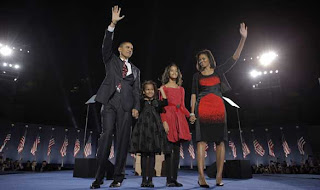
Well today our US friends celebrate the birthday of Martin Luther King. A on Tuesday they celebrate the 1st non white President of the United States. "The Dream" that Dr. King had really never hit me. Until I looked at some of the past footage and understood the history of what the black person had in the USA. When I boy in 60's I really did not understand the major events that was hhappingg in the 60's. Until I got older I sat in amazement how one part of society could treat another part of society. The human race can be mean and bunch of S.o.b's sometimes.
Now The USA has got new person and turned the page in their history. But it is only the start there is a lot of work down there. But there is a lot of work in our counrty to do also. With our 1st nations people. There is a in my opinion lost generation of 1st nations people in this counrty. I hope they get spark from this election in the USA. They have to take up matlee of leadership. There are great leaders in the 1st nations community . I hope one of them finds strength in the election in the USA . To come a lead in Canada . The status quo not working here. it is time for new leadership new ideas to help moving this coucounrtyong. " I always lived by the moto If you are a jack ass you are a jackass no matter what color or creed you are. There is no color in the word jackass" So the good will win out. Good will beat evil. In my opinion.

Here the story's that inspired my rant for today,

Monday January 19, 2009 - 09:49am (CST)
Entry for January 19, 2009
Washington locals excited, but bracing for inconvenience
By Kristi Keck
CNN
WASHINGTON (CNN) -- Washington residents are bracing for the estimated 2 million people flocking to Washington to see Barack Obama's inauguration Tuesday.

A car decorated with support for Obama moves through the capital.

Road closures, tourist-flooded streets and long lines for, well, everything, mean locals will have to be patient.

"You just have to give yourself a little extra time when everything's going on so you don't get caught up in it," said Aisha Williams, who works at a camera shop off Pennsylvania Avenue.

She plans to arrive at work at 4:45 a.m. on Tuesday -- more than 5 hours before the store opens -- to avoid the traffic.

Her co-worker, Ken Kwiatkowski, is doing more than that. He stayed in a hotel for the past two nights in order to avoid a congested 20-mile commute from Springfield, Virginia. He's going home later Monday and avoiding work altogether on Tuesday.

It's not just their schedules they have to change. The Secret Service has stopped by "more than I care to see," Williams said, to tell them what they can and cannot sell during the inauguration. As a security precaution, vendors have had to remove backpacks, picture frames and some types of cameras.

Alecia Cole, who lives just outside of Washington said she and her husband are "getting out while the getting's good."

"We're actually leaving town," Patrick Cole said. "There's going to be too many people here, and I'd rather just let them have their fun, and I'll come back when it's over."

But not everyone is as easygoing. On a flight from Atlanta, Georgia, to Washington on Sunday morning, one woman burst into tears as she found out not all of her relatives would be seated on the overcrowded plane.

Don't Miss
As the flight attendant pointed out how busy they were with the inauguration, the woman made it quite clear she didn't care about the inauguration; she was just trying to get home for work.
Getting to Washington is one thing, but navigating the city is another. On Sunday night, crowded streets gave a glimpse of the inconveniences that are bound to grow as more visitors arrive.

Sidewalks and restaurants were packed near the National Mall and those hoping to go to their neighborhood Starbucks might want to think again -- the line was to the door on the 1100 block of Pennsylvania Avenue. A sign in the window said the store will be open round the clock on Monday.

One woman passing by made a comment about the crowds and said she's never seen it like this during past inaugurations.

The crowd expected Tuesday would smash the current inaugural record, set in 1964 when 1.2 million people came to see Lyndon B. Johnson take the oath of office. About 300,000 showed up for George W. Bush's first inauguration, and about 800,000 turned out to see Bill Clinton's first swearing-in ceremony, according to various estimates.

Washington's Metrorail is expanding its hours, starting service at 4 a.m. on Inauguration Day.

"We expect that our stations, trains and buses will be packed as people head to the Inauguration, and we expect to see even more crowded conditions afterward," Metro General Manager John Catoe said on the Metro's Web site. "People should plan to wait in long lines to get back into Metro stations after the Inauguration, at least for an hour or more."

People will likely opt for the Metro, because two of the major routes coming into the city, I-395 and I-66, will be closed to inbound traffic for private vehicles.

And for those coming from Virginia, all of the bridges to Washington are going to be shut.

Amtrak, charter buses and taxis are other options for those planning to attend.

As stressful as the travel situation may be, people like Kwiatkowski are enjoying the hustle while it lasts and taking solace in knowing that Wednesday may bring calm.

"It's all worth it," he said. "It's historic, it's very busy and I get to meet so many nice people

WASHINGTON (CNN) -- More than two-thirds of African-Americans believe Martin Luther King Jr.'s vision for race relations has been fulfilled, a CNN poll found -- a figure up sharply from a survey in early 2008.


Martin Luther King Jr. waves to supporters from the steps of the Lincoln Memorial on August 28, 1963.


The CNN-Opinion Research Corp. survey was released Monday, a federal holiday honoring the slain civil rights leader and a day before Barack Obama is to be sworn in as the first black U.S. president.

The poll found 69 percent of blacks said King's vision has been fulfilled in the more than 45 years since his 1963 "I have a dream" speech -- roughly double the 34 percent who agreed with that assessment in a similar poll taken last March.

But whites remain less optimistic, the survey found.

"Whites don't feel the same way -- a majority of them say that the country has not yet fulfilled King's vision," CNN polling director Keating Holland said. However, the number of whites saying the dream has been fulfilled has also gone up since March, from 35 percent to 46 percent.

In the 1963 speech, delivered to a civil rights rally on the Mall in Washington, King said: "I have a dream that my four little children will one day live in a nation where they will not be judged by the color of their skin, but by the content of their character."

"Has that dream been fulfilled? With the election of Barack Obama, two thirds of African-Americans believe it has," CNN senior political analyst Bill Schneider said.

"Most blacks and whites went to bed on election night saying, 'I never thought I'd live to see the day.' That's what the nation is celebrating on this King holiday: We have lived to see the day," Schneider said.

What about the Voting Rights Act, one of the signature achievements of the civil rights movement, which will be reviewed by the Supreme Court later this year? Two-thirds of blacks questioned in the poll say the U.S. still needs the Voting Rights Act today, but white respondents are split down the middle over whether that law is still necessary.

In November, a majority of black respondents said that Obama's victory signaled a new era in race relations. The poll suggests that a majority today no longer feels that way, although most blacks predict some improvement on racial issues.

"In the immediate aftermath of Barack Obama's victory in November, African-Americans were cautiously optimistic about the future of race relations in the U.S., but some of that optimism has faded since that time," Holland added.
In November, a majority of blacks for the first time believed that the U.S. would eventually find a solution to its racial problems; now a majority of blacks believe that race relations will always be a problem in this country. Blacks do believe that the Obama presidency will be good for them -- 61 percent say that the quality of life for African-Americans will improve over the next four years. Optimism for a new era has also dropped among whites.


"We saw a burst of enthusiasm about race relations immediately after Obama's election. The initial excitement has cooled a bit. But most blacks and whites still foresee some improvement in race relations," Schneider said.

The CNN/Opinion Research Corporation poll was conducted January 12-15. Pollsters questioned 1,245 adult Americans, including 798 whites and 332 blacks, by telephone. The survey's sampling error is 3 percentage points for the overall sample and 4.5 percentage points for the breakdowns by race.

Thursday, January 15, 2009

Mr Big vs Joe Citzen


The little guy vs Mr. Big?
Is this the little guy vs Mr Big. Or is it a guy looking for free PR . Also I see some lawyers will make money on this and not thing will change. What do you thinking. Some when you are a small gear in a big machine you get stripped.Unity-area farmer Gordon Wallace (right) and his lawyer, Joel Hesje
Photograph by: SP Photo by Gord Waldner, The StarPhoenixSaskatchewan farmer Gordon Wallace has launched a lawsuit against both major Canadian railways and the federal government, claiming western farmers have been substantially overcharged for grain transportation for possibly as long as 25 years.

The Unity-area farmer is represented by McKercher LLP, a Saskatoon law firm. Wallace hopes to have the suit certified as a class action, representing all Western Canadian grain producers.

Doug Richardson, a partner with the firm, said the action is "one of the largest lawsuits of its type ever started here in Saskatchewan."

At a news conference Tuesday, Wallace said freight rates are a huge problem for farmers who must ship their grain with Canadian National or Canadian Pacific railways. Freight rates are regulated by the federal government, giving farmers no negotiating power.

"It's not like having a truck and agreeing on a freight rate," said Wallace.

Asked why he launched the suit, Wallace said, partly joking, "I like to complain." Then he added, "If you're going to complain, maybe you should try to change things."

Wallace, who farms 6,500 acres with his two brothers, said he pays abut $1 per bushel for freight when shipping his grain to port.

"It's big money. It's one of our largest costs. A dollar a bushel is a lot of money."

The suit was filed following a ruling by the Canadian Transportation Agency (CTA) in February 2008, which found the maintenance cost for a hopper car is $1,372 annually. However, freight rates included an embedded maintenance cost of $4,379 per car -- about 300 per cent higher than the real cost.

The CTA finding was challenged by CN and CP, but the Federal Court of Appeal upheld the CTA ruling in November 2008.

Wallace's lawyer, Joel Hesje, said the ruling showed there has been "serious and substantial overcharging" of grain producers.

The CTA reduced the freight revenue cap by $72.2 million for the 2007-08 crop year, but the question of how long farmers have been overcharged for grain transportation remains, said Hesje.

Railway charges to grain producers have been regulated by federal agencies since 1983, Hesje explained. In 1996, the regulated rates evolved into a rate cap system, which changed again in 2000 to the revenue cap system. The regulated environment makes it essentially impossible for individual producers to negotiate transportation rates.

The lawsuit also claims federal agencies overseeing transportation did not exercise scrutiny and due diligence. The minister of transport, now John Baird, the Canadian Transportation Commission, the National Transportation Agency and the CTA are all named as defendants.

CN, CP and the federal government were served with Wallace's statement of claim last week. Normally, the defendants have 30 days to respond with a statement of defence.

McKercher lawyers then have 90 days to file a class-action certification application. If the claim is not certified, the action will likely end there, due to the huge costs involved in conducting a class-action suit.

Hesje noted that Wallace is going up against two massive companies and the government.

"We're under no delusions that this is going to be easy," said Hesje.

None of the allegations have been proven in court.

If the defendants can prove that railways have been overcharging by approximately $70 million since 1983, the action could potentially seek $1.75 billion in damages to be returned to Western Canadian farmers.

CN and Transport Canada officials would not comment because the lawsuit is before the courts.

CP spokesperson Breanne Feigel said the company is reviewing the allegations.

However, Feigel added the amount CP is entitled to earn by moving grain is determined by the CTA, "so there's no benefit to a railway exceeding that entitlement number because that money is not capped with the railway. It's given over to the Western Grains Research Foundation to the benefit of Canadian farmers.

"We've worked for a number of years to meet that entitlement number."

jpaulson@sp.canwest.com

Saturday, January 10, 2009

A life time in a month


Entry for January 10, 2009
I found these articles . I thought they were very intersting.. It is from this web site

http://www.javno.com/en/world/clanak.php?id=222647

Published: December 08, 2008 18:34h
Canada's opposition Liberal Party moved into high gear on Monday to try to quickly replace its politically wounded leader, Stephane Dion, with someone who can challenge Conservative Prime Minister Stephen Harper effectively.
The front-runner to lead the Liberals, Michael Ignatieff, also distanced himself sharply from teaming up with the leftist New Democrats and separatist Bloc Quebecois to defeat the minority Conservatives in January and try to install a Liberal-NDP coalition government.

Under the coalition agreement, signed a week ago, Dion would have become interim prime minister even though he led his party to a thumping loss in the Oct. 14 election.

The coalition idea has proved unpopular, especially in Western Canada, and sharply boosted Conservative support in opinion polls. As a result, Liberals of all stripes are calling for Dion to step down soon rather than waiting until a leadership convention scheduled for May.

"His time has come, and we'd like him to go with our thanks and respect," Liberal Sen. Colin Kenny told CBC television.

Member of Parliament Hedy Fry, who backs Ignatieff's main leadership rival Bob Rae, told CTV television she expected Dion to step down in the next few days.

"I don't think there is any doubt," she said.

Senior Liberals have been meeting and phoning each other on Sunday and Monday but the stark reality is that there is no provision in the party's constitution to force Dion to quit before May if he chooses to hang on.

"Ultimately, the decision to resign or not rests with him," party spokesman Daniel Lauzon said.

If he resigns before May, the party's national executive would choose an interim leader "in consultation with" the Liberal caucus in Parliament, which will meet in Ottawa on Wednesday morning.

Caucus chairman Anthony Rota said that if Dion does resign, the caucus would choose a new caucus leader and pass that recommendation to the executive, which would normally then endorse that choice as interim party leader until May.

Ignatieff, a former Harvard don who sits on the right wing of the Liberal party, has more support in caucus than Rae, a former Ontario premier who is on the party's left -- but Rota said no one can take anything for granted.

The only other leadership candidate, Dominic LeBlanc, was expected to withdraw from the race on Monday afternoon and put his support behind Ignatieff.

Last week Ignatieff said Liberals would not automatically try to replace Conservatives with the coalition after they present the annual budget on Jan. 27, and in a television interview on Sunday he stepped back even further.

"My position can be summarized as coalition if necessary but not necessarily coalition," he told CTV.

"My view of this is that Canadians would not understand a party that said we're not even prepared to look at the budget ... and we already know how we're going to vote."

Polls taken last week as Harper jostled for power with the coalition showed the Conservatives with a lead of 20 percentage points over the Liberals, and with enough support -- over 40 percent -- to enable them to win a majority of seats in the House of Commons if an election were held now.

Ignatieff appears to recognize the risk that, if the government were brought down in late January or early February, the coalition might not be given a chance to govern and the parties might instead by thrust into their second election in less than a year.

POLITICS Canada`s Liberals Bounce Back With New Leader
Dion`s deep unpopularity had put Prime Minister Stephen Harper`s Conservatives ahead of the Liberals by about 20 points

Liberal Leader Stephane Dion TEXT Published: January 10, 2009 08:57h
. New leadership has helped Canada's opposition Liberals recover public support they had lost following threats to topple the minority Conservative government, two polls released on Friday showed.
Leader Michael Ignatieff has distanced himself from -- though not abandoned -- an idea put forward by predecessor Stephane Dion to team up with the leftist New Democrats and separatist Bloc Quebecois to try to replace the Conservatives with a coalition government.

The coalition idea and Dion's deep unpopularity had put Prime Minister Stephen Harper's Conservatives ahead of the Liberals by about 20 points -- a level where they would have been able to win a parliamentary majority. But under Ignatieff the race has tightened dramatically.

A Nanos Research poll published by Canadian Press had the Liberals ahead of the Conservatives by 34 percent to 33 percent. It put the New Democrats at 19 percent.

An Ipsos Reid poll provided to Canwest/Global and CFRB radio had the Conservatives still ahead, by 39 percent to 28 percent, with the New Democrats at 15 percent.

Pollster Nik Nanos said the surge in Liberal strength could be partly a honeymoon effect.

"What I've found is whenever there's a new leader, before people get to know who that leader is, they project positive things onto that leader," he told Canadian Press.

In the October general election, the Conservatives took 37.6 percent of the vote, the Liberals 26.2 percent and the NDP 18.2 percent.

Ignatieff, a former Harvard professor, has said he would not automatically bring the government down over its Jan. 27 budget, but he did warn on Friday that the coalition idea remained alive.

"All options remain on the table here, and he (Harper) shouldn't underestimate us. He shouldn't underestimate my resolve," he told CBC television.

Nanos called 1,003 Canadians from Jan. 3-7, a survey sample considered accurate to within 3.1 percentage points 19 times out of 20. Ipsos Reid surveyed 1,000 people from Jan. 6-8.